Plug in
The 37.1 kWh battery charges from a plain 240-volt socket at home, or up to 50 kW DC on the road — 30–80% in about 24 minutes.
Plug 240v · Brisbane, Queensland
PLG240 — "plug 240 volts" — is the number plate on my GWM Tank 300 PHEV. It charges from a 240-volt socket, does the daily run on electricity alone, then hands that same 240-volt power back out to whatever needs it.
Meet the car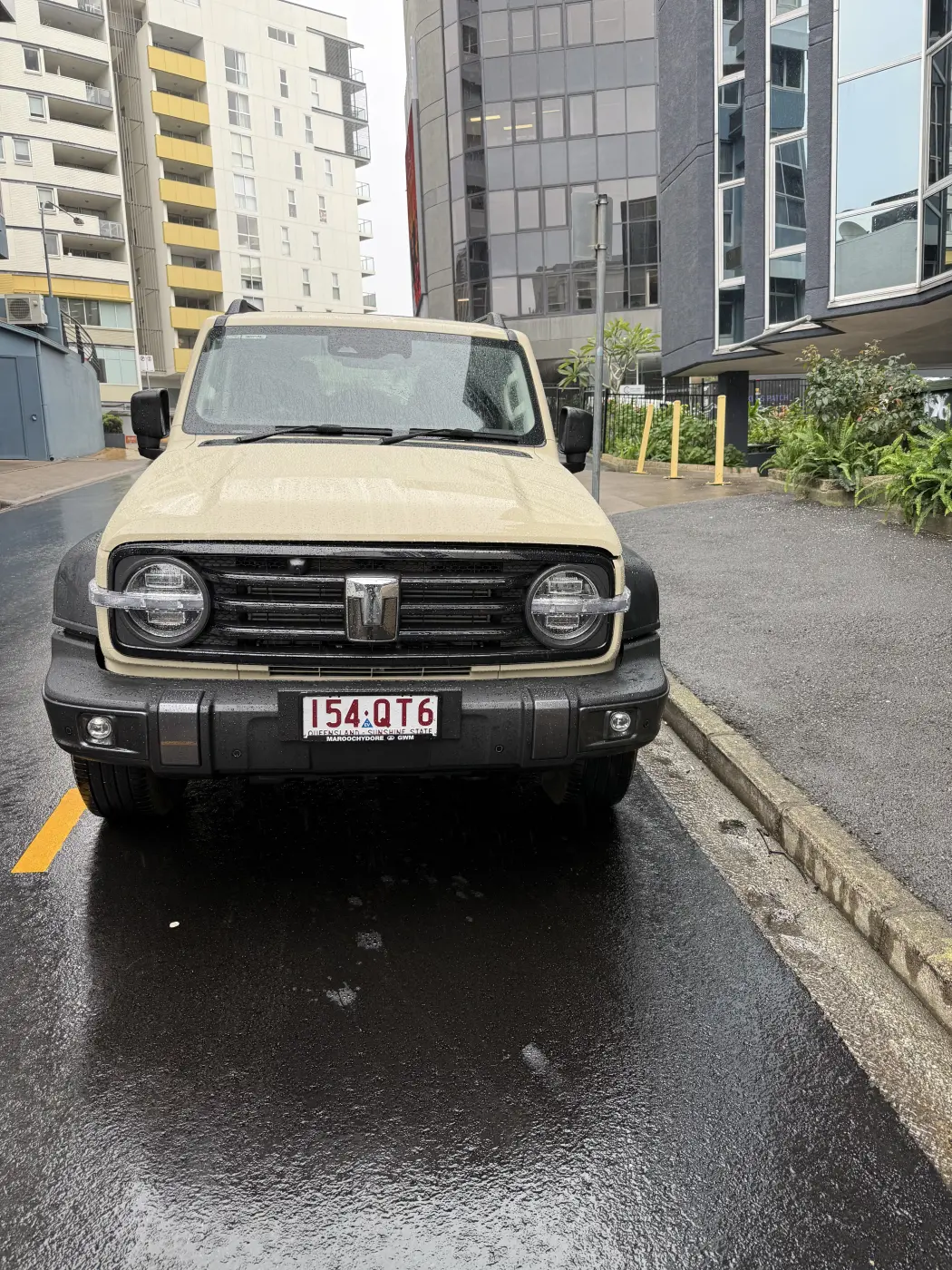
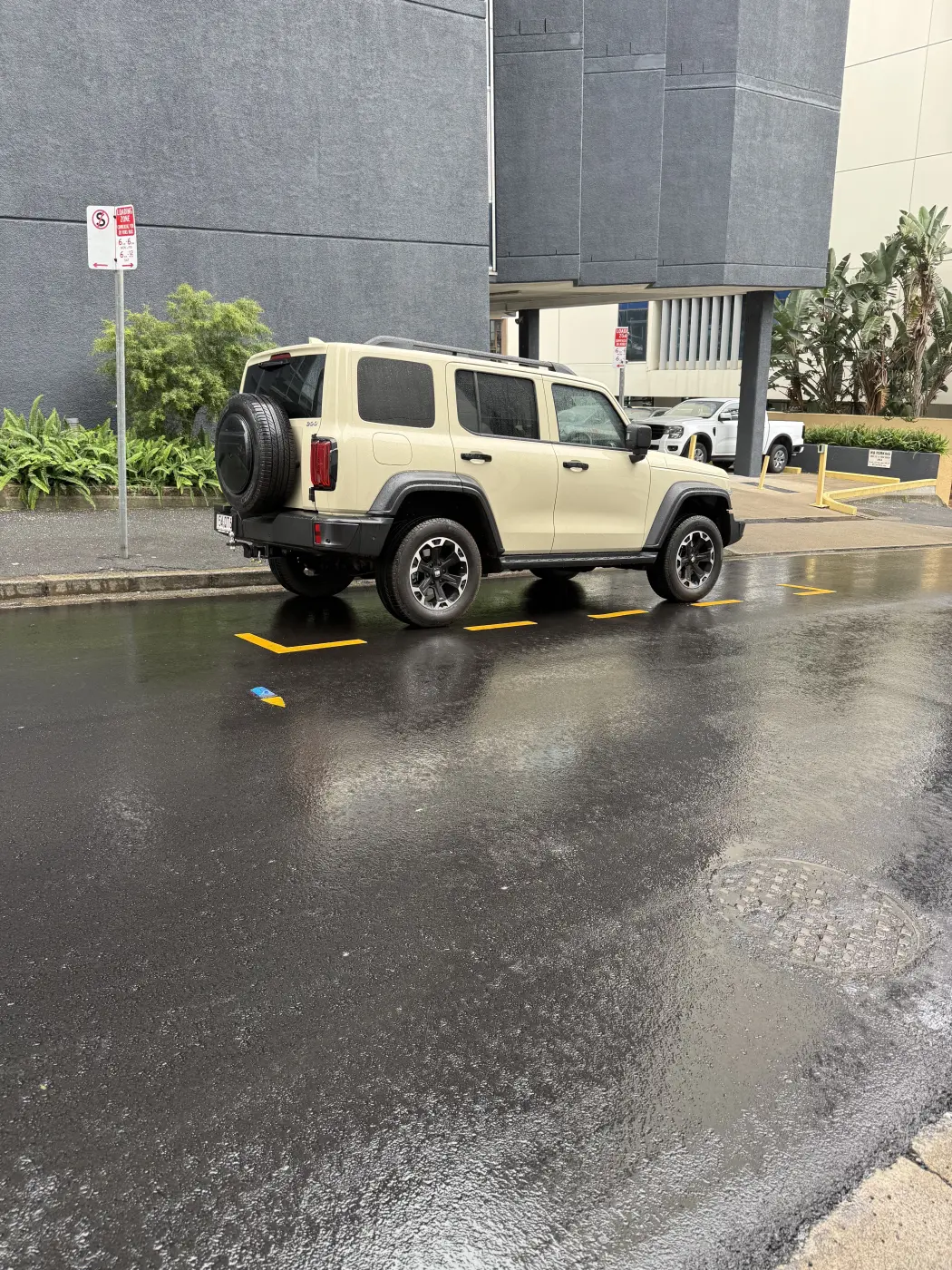
The name on the plate
The 37.1 kWh battery charges from a plain 240-volt socket at home, or up to 50 kW DC on the road — 30–80% in about 24 minutes.
Up to 115 km (NEDC) of silent, petrol-free driving covers the school run, the commute and the shops before the 2.0-litre turbo ever wakes up.
Vehicle-to-load reverses the flow: a 6 kW 240-volt outlet runs the campsite fridge, the kettle, or the tools — straight from the tank, so to speak.
What a reader needs to know
Combined output from the 2.0-litre turbo-petrol engine plus electric motor (GWM's Hi4-T system).
0–100 km/h. Subtle it is not; quick it is.
Electric-only range (NEDC) from the 37.1 kWh battery — most weeks are all-electric.
Total range (NEDC) with the petrol engine along for the ride — Sydney to Brisbane without a top-up.
Braked towing capacity — the van comes too.
Vehicle-to-load output: a serious appliance-grade power outlet on wheels.
A proper part-time 4WD: 2H / 4H / 4L transfer case and a rear differential lock for the steep, slippery stuff.
Nine-speed hybrid automatic — gears for the highway, one motor for the town.
Why it's cool
Most plug-in hybrids quietly save fuel on the commute. This one also drags a trailer up a fire trail, locks its rear diff on a clay rut, then boils the billy at camp off its own battery — all before charging itself back up overnight from a normal powerpoint. That's the whole idea behind PLG240: 240 volts, both directions.